Pest Tips
Pet-Safe Pest Control: What That Phrase Actually Means
Every pest control company claims to be pet-safe. Here is how to tell who actually is — and what questions to ask before anyone sprays your yard.
"Pet-safe" is not a regulated term
There is no federal definition of "pet-safe pest control." Any company can put it on a flyer. What matters is what is actually in the product, how it is applied, and what the re-entry interval is — the number of hours pets and kids should stay off treated surfaces.
At HOAX, we use people, pet, and plant friendly products as our standard. That means:
- Modern, low-toxicity active ingredients chosen for low mammalian toxicity
- Products applied to entry points and harborage, not living spaces
- Short re-entry intervals (typically dry-to-touch, often 30-60 minutes)
- No fogging or "bombing" inside homes with pets
Questions to ask before any company sprays
- What is the active ingredient and what is its EPA signal word? ("Caution" is the lowest tier; avoid anything labeled "Warning" or "Danger" indoors.)
- What is the re-entry interval? Anything more than a few hours indoors is a red flag for a normal residential service.
- Will you treat where my pets eat, sleep, or play? The right answer is "no, we treat perimeters and entry points."
- Are baits enclosed in tamper-resistant stations? This matters for rodent baits especially — never accept loose pellets where a dog could find them.
- What do I do if my pet contacts a treated area? A good tech can answer this without checking a label.
What we do for households with pets
- Pre-service walkthrough so you can move bowls, beds, and toys
- Granular baits placed in lockable stations only
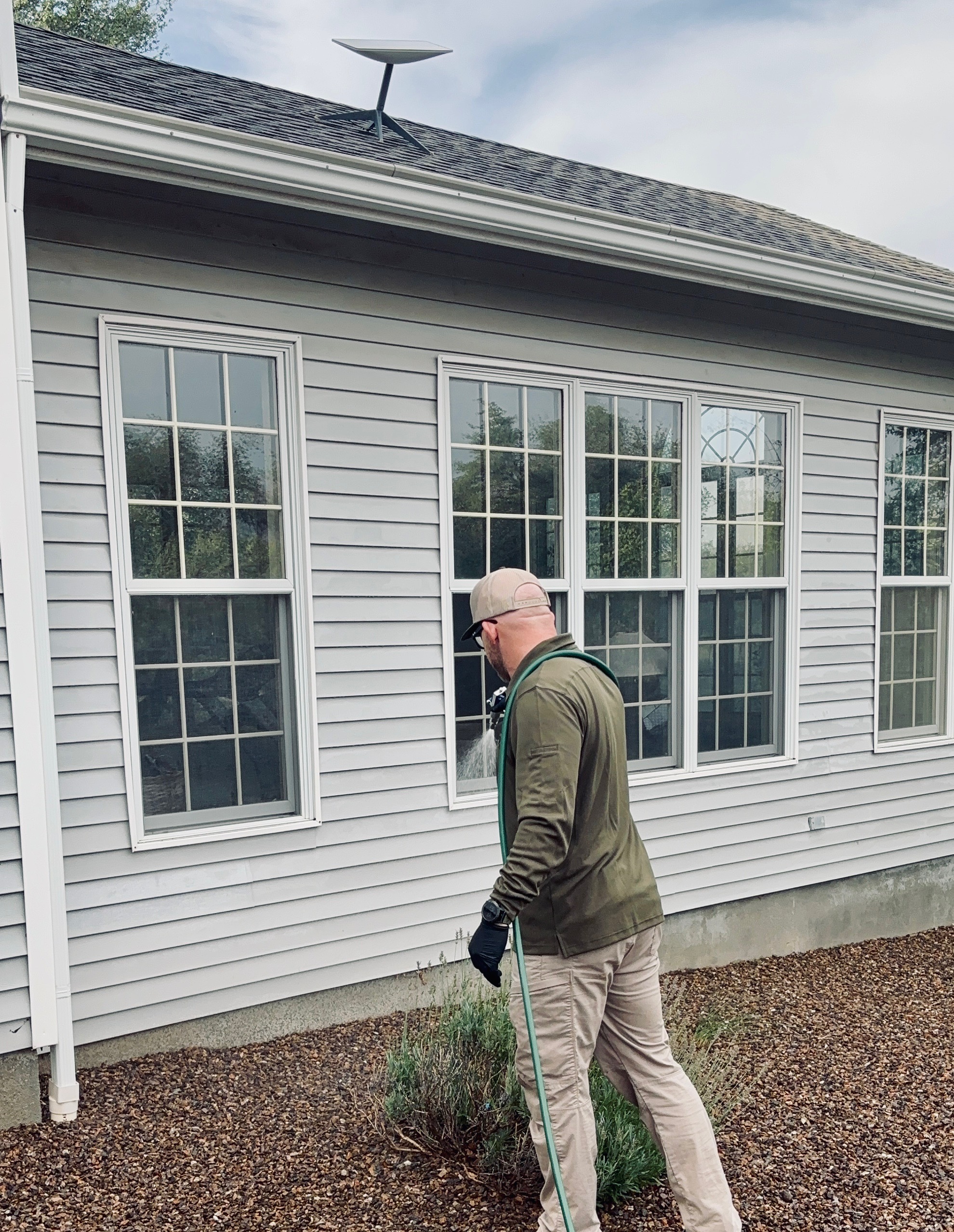
- Liquid applications focused on the exterior perimeter, eaves, weep holes, and harborage zones
- Indoor treatments (when needed) confined to cracks, voids, and entry points — not floors or counters
- Clear written notes on every visit: product used, where, and re-entry guidance
What "pet-safe" still does not mean
It does not mean zero risk. Cats are especially sensitive to pyrethroids; certain rodenticides are extremely dangerous if eaten by a dog (and we generally avoid them anyway). The right answer is the right product, applied the right way, in the right place — not a marketing claim.
If you have specific concerns — a senior pet, a reactive dog, a snake or reptile in the home — tell us before we book. We can adjust products and placement accordingly.